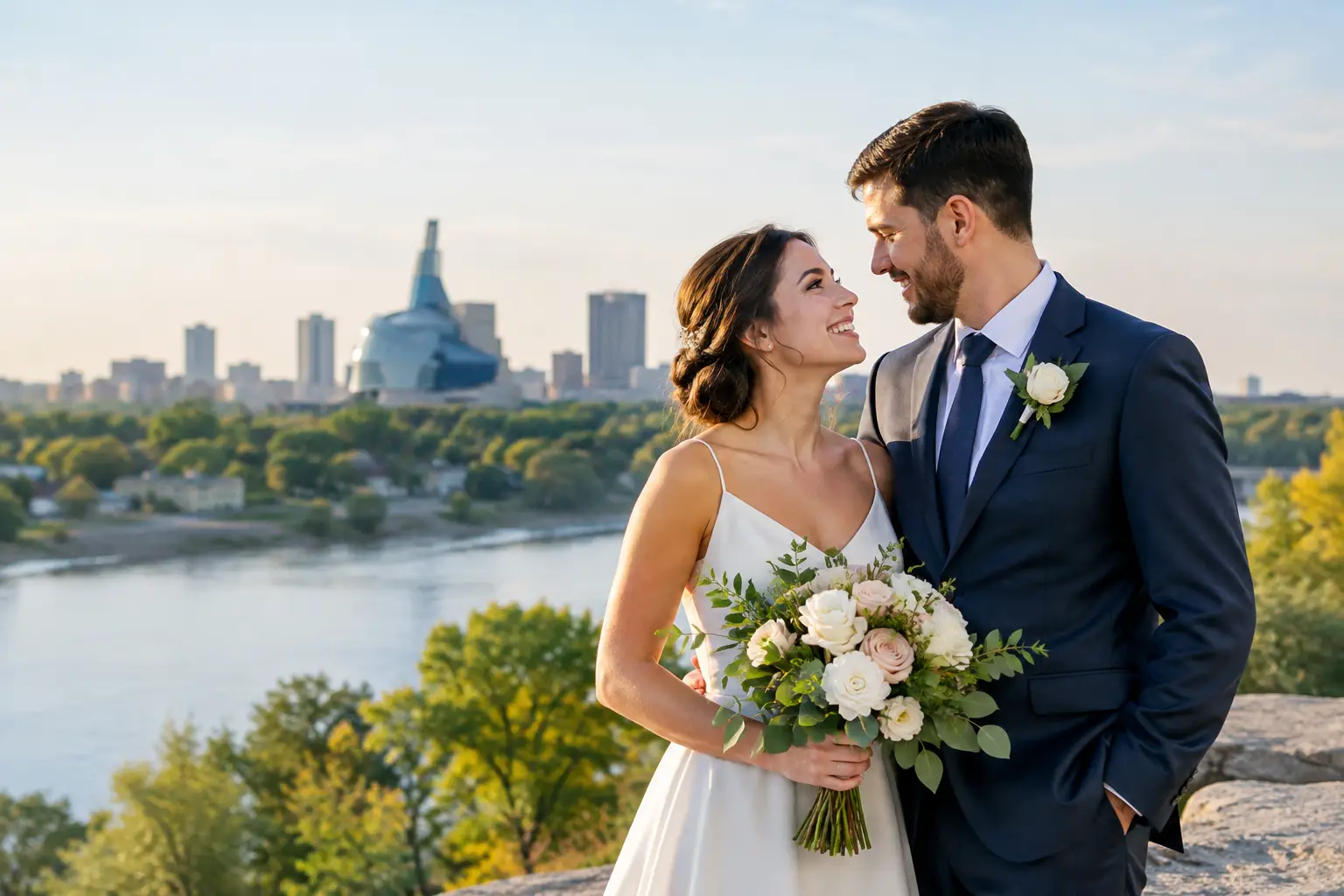
A marriage ceremony can be quiet and private, filled with family, held in a favorite Winnipeg restaurant, or planned on a short timeline. Whatever it looks like, the legal details still need to be handled with care. To say ‘I do’ in Manitoba – easy marriage registration made simple – starts with understanding what you need before the ceremony and choosing a licensed marriage commissioner who will guide the process clearly.
Your wedding day should feel like a meaningful commitment, not a paperwork puzzle. With the right preparation, you can focus on each other while knowing the ceremony, signatures, and registration are being handled properly.
What Makes a Manitoba Marriage Legally Recognized?
A beautiful setting and heartfelt vows matter, but a legally recognized marriage also requires the correct legal steps. In Manitoba, couples must obtain a valid marriage license before the ceremony. The license is issued separately from the ceremony itself, so it is wise to arrange it as early as your timeline allows.
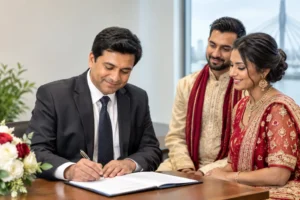
Your ceremony must then be performed by someone authorized to solemnize marriages in Manitoba, such as a licensed marriage commissioner. You will also need the required witnesses present to sign the marriage documents. A commissioner can explain what to bring, where signatures are needed, and how the paperwork is completed after your vows.
This division of responsibilities is helpful to understand. The marriage license gives you permission to marry. The commissioner performs the legal ceremony and completes the required registration documents. After the ceremony, the marriage is registered through the appropriate provincial process. Your official marriage certificate is requested separately when you need it for a name change, benefits, immigration, insurance, or other records.
Requirements and processing details can change, especially when you are planning on short notice. Ask questions early so there are no surprises about identification, witnesses, license timing, or certificate requests.
Say ‘I Do’ in Manitoba With Less Stress
The simplest wedding plans are often the ones with the clearest sequence. First, decide what kind of ceremony feels right for you. You may want a brief civil ceremony with only your witnesses, a private elopement, or a personalized wedding that includes your loved ones and traditions. Next, secure your marriage license and confirm your ceremony date, time, location, and guest count with your commissioner.
Once those pieces are in place, the rest becomes much easier to organize. Your commissioner can help you understand the flow of the ceremony, from the legal declaration and vows to the signing of the documents. If you would like a personal touch, you can also discuss readings, ring exchanges, acknowledgments of family, or a few words about your story together.
A personalized ceremony does not need to be long or elaborate to feel sincere. For some couples, the perfect moment is a simple exchange of vows in a peaceful setting. For others, it is standing in front of family and friends with a ceremony that reflects their values, culture, and future together. Both can be legal, organized, and deeply meaningful.
Start With the Marriage License
Do not leave the license until the last detail of planning. Before booking travel, finalizing a venue, or inviting guests, make sure you understand the license process and what documents may be required. A marriage commissioner cannot issue the license for you, but can help you plan your ceremony around it.
Bring the original license to the ceremony as instructed. Keep it protected and easy to find on the day. If you are assigning a friend or family member to carry it, make that responsibility clear well in advance. A small step like this prevents unnecessary last-minute stress.
Choose Witnesses You Can Count On
Your witnesses are part of the legal moment, not just the photos. Choose adults who can arrive on time, remain through the signing, and understand that they will be asked to sign the marriage documents. If you are eloping or planning a very small ceremony, confirm witness arrangements early rather than assuming someone will be available at the last minute.
A good commissioner will make this part feel calm and straightforward. You should know exactly when the witnesses need to step forward and what happens after the vows.
Ceremony Options That Fit Your Life
There is no single right way to get married in Winnipeg or the surrounding Manitoba communities. The best option depends on your timeline, comfort level, location, and the kind of experience you want to remember.
A civil ceremony is a practical choice for couples who want a legal marriage without a large event. It is concise, respectful, and focused on the commitment you are making. This can work especially well for couples planning a larger celebration later, those who prefer privacy, or those who simply want a simple and dignified ceremony.
An elopement offers more intimacy while still leaving room for personal vows, rings, and a meaningful location. It may be just the two of you and your witnesses, or a small circle of people who matter most. Elopements are often less complicated than traditional weddings, but they still deserve thoughtful coordination around the license, witnesses, and ceremony location.
For couples planning a wedding with guests, a mobile marriage commissioner can come to a venue that reflects your plans. That may be a home, park, restaurant, event space, or another approved location. Mobile service gives you flexibility, but it also means confirming practical details such as parking, ceremony start time, weather backup plans, accessibility, and a quiet place for signing documents.
Same-day wedding ceremonies may be possible in certain circumstances, but they depend on license readiness and commissioner availability. If your timeline is urgent, communicate that right away. Clear information about your preferred date, location, and whether your license is already in hand helps determine what can realistically be arranged.
How a Commissioner Helps the Day Run Smoothly
A marriage commissioner does more than stand at the front and read a script. The right professional brings structure to a moment that can feel emotional, fast-moving, and important. They arrive prepared, guide everyone through the legal requirements, conduct the ceremony with respect, and ensure the documents are completed correctly.
That steady guidance is particularly valuable when families are gathering, vendors are waiting, or nerves are high. You should not have to wonder who signs first, whether the legal wording has been included, or what happens to the paperwork after the ceremony. Your commissioner should explain the process in plain language before the day arrives.
With Deepika Aggarwal, couples can choose a ceremony that feels personal while receiving direct guidance on legal documentation and ceremony logistics. The goal is not to make your wedding feel formal for the sake of formality. It is to make sure the legal foundation is handled properly while the experience still feels like yours.
A Few Details Worth Confirming Before You Book
Before your ceremony date is finalized, have a brief but complete conversation about the essentials. Confirm the exact date, start time, address, names as they appear on your license, and the number of guests you expect. If your plans include travel, a public outdoor setting, cultural elements, or a tight timeline, mention those details early.
It also helps to discuss the ceremony style. Do you want a short legal ceremony, traditional vows, personal vows, a ring exchange, or a blend of these? Sharing your preferences in advance allows the ceremony to feel intentional rather than rushed.
Finally, make room for the human side of the day. Build in a few extra minutes before and after the ceremony. Arrive early, keep the marriage license with your essentials, and let your witnesses know where to be. Those small preparations create the breathing room that lets you actually enjoy the moment.
Your marriage is both a legal milestone and a personal promise. When the paperwork is clear, the timing is organized, and the ceremony is shaped around your story, you can stand together, take a breath, and give your full attention to the words that matter most.