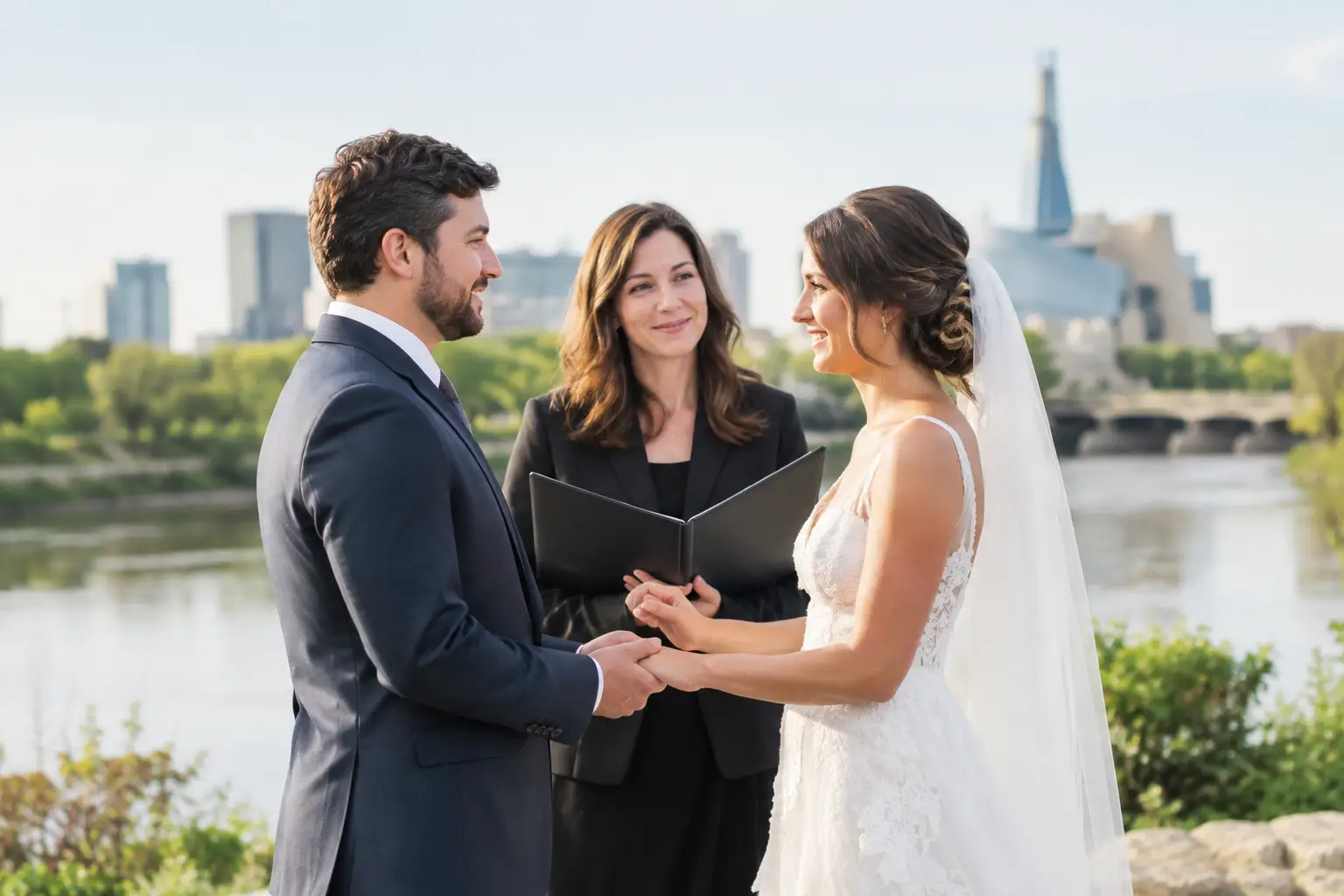
A small wedding can hold some of the biggest emotions of your life. Whether you are exchanging vows with just your witnesses, planning an elopement, or gathering a handful of loved ones, the right intimate wedding officiant in Winnipeg helps the moment feel calm, personal, and legally complete.
For many couples, the priority is not a large production. It is having a meaningful ceremony that reflects who they are, without confusion over paperwork, timing, or what needs to happen next. A licensed marriage commissioner can bring structure to the legal details while creating space for the joy of your commitment.
What Makes an Intimate Wedding Ceremony Different?
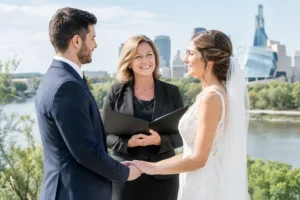
An intimate wedding is defined less by a number and more by the feeling. It may take place at home, in a quiet park, at a favorite restaurant, in a private venue, or in another meaningful Winnipeg-area location. Some couples invite only the people who know them best. Others choose a private civil ceremony before celebrating with a larger group later.
The benefit of a smaller gathering is freedom. You can choose a ceremony length that suits you, include personal vows, recognize family traditions, or keep the words simple and direct. There is no single right way to get married.
At the same time, a smaller ceremony still requires the same care around legal requirements. Your marriage license, witnesses, identification, signatures, and completed registration all matter. An experienced commissioner keeps these details organized so you can stay present for the moment itself.
Why Your Officiant Matters for a Small Wedding
At a large wedding, there are often planners, coordinators, photographers, and family members helping keep the day on track. At an intimate ceremony, the officiant often becomes the person guiding the flow. That makes a warm, dependable, and prepared approach especially valuable.
A licensed marriage commissioner does more than read words during a ceremony. They help you understand what is needed before the wedding, confirm the legal elements required for the marriage to be recognized, and complete the paperwork properly afterward. When your timeline is short or your ceremony is intentionally simple, that clarity can remove a great deal of stress.
The personal fit matters too. You should feel comfortable asking questions and sharing what you want the ceremony to feel like. Some couples prefer a brief legal ceremony with a few heartfelt words. Others want to write their own vows, include a ring exchange, or acknowledge children, parents, and close friends. A thoughtful officiant listens first, then helps shape a ceremony that feels natural to you.
How to Choose an Intimate Wedding Officiant in Winnipeg
Start by confirming that the person is authorized to perform legally recognized marriages in Manitoba. This is the essential first step. A beautiful ceremony only becomes a legal marriage when the correct requirements are met and the paperwork is handled accurately.
Then, look for an officiant whose service matches the kind of day you are planning. If you want to marry in your backyard, at a hotel, in a park, or at another private venue, ask whether mobile ceremonies are available. If you are arranging a short-notice wedding, ask about scheduling options and what must be in place before a ceremony can be booked.
It also helps to discuss the tone of the ceremony early. You may want something formal, relaxed, spiritual in feeling without being religious, or entirely civil and straightforward. Your officiant should be able to explain the legal components while respecting your preferences, cultural background, and family dynamics.
Finally, notice how clearly they communicate. A responsive commissioner who gives you direct answers about the marriage license, witnesses, location, timing, and next steps can make planning feel much easier. Couples should not have to guess what happens before or after they say, “I do.”
Questions Worth Asking Before You Book
A short conversation can tell you a lot. Ask whether the officiant is available on your preferred date and at your chosen location, how far in advance you need to obtain your Manitoba marriage license, and what documents or details they need from you. You can also ask how the ceremony can be personalized and whether they offer simple, private, or same-day ceremony options when availability allows.
Be upfront about your guest count and timeline. An elopement with two witnesses has different logistics than a 30-person backyard gathering. Sharing those details allows your officiant to recommend an approach that suits your day rather than forcing your plans into a standard format.
Planning the Legal Details Without Losing the Meaning
Marriage paperwork can feel unromantic, but it is part of caring for the life you are building together. The simplest way to reduce stress is to handle the marriage license early and keep it safe until your ceremony. Your commissioner can guide you on the process, but couples are responsible for obtaining a valid license before the marriage takes place.
You will also need witnesses who meet Manitoba’s requirements. For a private ceremony, this is often where couples need a little extra planning. If you are eloping or keeping the gathering very small, make sure you have the required witnesses arranged well before the ceremony begins.
On the wedding day, bring your marriage license, rings if you are exchanging them, and any vows or readings you would like to include. Arrive with enough time to settle in, especially for outdoor locations where weather, parking, or access can affect the schedule. A calm ten minutes before the ceremony can make a real difference.
After the ceremony, the commissioner completes the required registration steps. If you need a legal marriage certificate later for name changes, benefits, immigration, insurance, or other official purposes, it is important to understand that the license and certificate serve different purposes. Asking about this in advance helps you plan your next steps with confidence.
Make the Ceremony Feel Like Yours
Personal does not have to mean long or complicated. Often, the most memorable ceremonies are made of a few honest choices: a location with meaning, words that sound like the two of you, and the people you truly want beside you.
You may choose to share personal vows, but you do not have to. Some couples speak from the heart; others prefer a simple repeat-after-me format because they know emotions may take over. Both are meaningful. You can include a short reading, acknowledge loved ones who cannot attend, or take a quiet moment together before the legal portion begins.
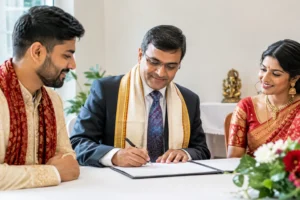
If family traditions are important, mention them early. A respectful officiant can help you think through how to include a cultural element, a blessing from a loved one, or a meaningful family role while ensuring the civil ceremony remains clear and legally recognized.
The trade-off with an intimate wedding is that every detail feels more visible. That can be beautiful, but it can also create pressure to make the ceremony perfect. Try to focus on what will matter when you look back: being present, hearing each other, and beginning your marriage with care.
A Calm Start to Your Marriage
Your wedding ceremony does not need to be elaborate to be deeply memorable. It needs to feel true to you, be legally handled with care, and leave you free to celebrate instead of worrying about logistics.
For couples who want direct guidance and a personal experience, Deepika Aggarwal provides commissioner-led ceremonies throughout Winnipeg and surrounding Manitoba communities. From private elopements to small gatherings, the goal is to make the legal process clear, organized, and respectful of your story.
Choose a date that feels right, secure your marriage license, gather the people you want close, and give yourselves permission to keep the day simple. The most meaningful part is not the size of the room. It is the promise you are making within it.