
A civil wedding ceremony can be wonderfully simple, but simple should never mean impersonal. Whether you are planning a private signing with two witnesses, an intimate elopement, or a celebration surrounded by family and friends, your ceremony can be legally recognized and still reflect the commitment you are making to one another.
For couples in Winnipeg and surrounding Manitoba communities, the most reassuring place to begin is understanding what is legally required, what choices are yours to make, and how a licensed marriage commissioner helps keep every detail organized.
What Is a Civil Wedding Ceremony?
A civil wedding ceremony is a legal marriage ceremony performed by an authorized marriage commissioner rather than a religious officiant. It includes the elements required to make your marriage official, while giving you room to choose a tone that feels right for you as a couple.
Some couples prefer a brief, straightforward ceremony focused on the legal declaration and signing. Others want personal vows, rings, a reading from someone close to them, or a warm welcome for their guests. Both approaches can be meaningful. The right ceremony is not defined by its length or guest count. It is defined by the care you bring to the moment.
A civil ceremony is also a good choice for couples who want a non-religious service, are blending traditions, are planning a second marriage, or simply want a flexible and personal way to marry. Your commissioner can guide the legal portion with professionalism while helping the ceremony feel relaxed, respectful, and true to your relationship.
The Legal Details to Arrange First
The emotional side of a wedding is often easier to picture than the paperwork. Taking care of the legal requirements early gives you more freedom to enjoy the rest of the planning process.
In Manitoba, you will need a valid marriage license before the ceremony takes place. A marriage commissioner cannot issue the license for you, so it is wise to arrange it well ahead of your wedding date. Marriage licenses are generally valid for a limited period, so timing matters. If your plans change, confirm that your license will still be valid on the day you intend to marry.
You will also need an authorized officiant and the required witnesses present for the ceremony. Your commissioner will ensure the legal declarations are completed, the marriage documents are signed correctly, and the paperwork is handled with care after the ceremony. Requirements can change, and individual circumstances may differ, so asking questions early is always a good idea.
A dependable commissioner should make this process feel clear rather than complicated. Before you book, share your preferred date, location, expected guest count, and any timing concerns. If you are hoping for a short-notice ceremony, be open about that from the beginning. Same-day wedding ceremonies may be possible when licensing requirements have already been met and availability allows, but they require prompt communication and careful coordination.
Your Marriage License Is Not a Detail to Leave Until Later
Many couples assume they can arrange the license immediately before the ceremony. That can create unnecessary pressure, particularly if you are planning around work schedules, travel, or a meaningful family date. Make the license one of your first practical tasks once you have chosen a general wedding timeframe.
Keep it in a safe place and bring it to the ceremony as instructed. Your commissioner can explain what will happen with the documents on the day, so you are not left wondering what to bring or where to sign.
Make the Ceremony Feel Like Yours
Legal wording is part of a civil ceremony, but it does not have to be the only thing your guests hear. Personal touches can make even a short ceremony feel heartfelt and memorable.
You might choose to exchange vows you have written yourselves, or you may prefer to repeat vows that are prepared for you. Some couples exchange rings, while others focus solely on spoken promises. You can include a brief reading, acknowledge children or loved ones, or simply keep the gathering centered on the two of you. There is no need to add traditions that do not feel authentic just because they are common at weddings.
It also helps to consider the atmosphere you want. A quiet, private ceremony may call for gentle and simple wording. A larger celebration may benefit from a warmer welcome, a few personal details, and a clear flow that keeps guests engaged. Your commissioner can help you find the balance between a ceremony that is legally complete and one that feels natural to stand in front of.
Personalization does not need to be elaborate. Often, the most moving ceremonies are the ones that make space for a couple’s own voices and values without trying to fit someone else’s idea of a wedding day.
Choose a Setting That Supports Your Plans
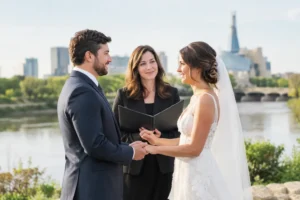
One of the advantages of a civil wedding ceremony is flexibility. You may choose a home, park, restaurant, event venue, hotel, or another location that is meaningful and practical for your celebration. A mobile marriage commissioner can come to your chosen venue, helping you create a ceremony around your plans rather than requiring you to build the day around a fixed location.
When selecting a site, think beyond how it will look in photographs. Consider privacy, parking, accessibility, weather backup plans, and whether everyone can hear the ceremony. Outdoor ceremonies can be beautiful, but wind, rain, traffic, and uneven ground can affect the experience. A covered option or indoor backup can make the day feel much less stressful.
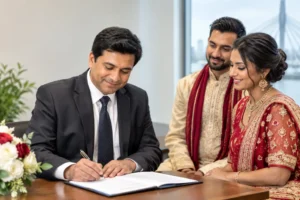
For a home ceremony or elopement, choose a signing area with a stable table, good lighting, and enough room for the couple, witnesses, and commissioner. This small practical step helps the paperwork portion go smoothly without interrupting the feeling of the occasion.
A Simple Timeline for a Calm Wedding Day
A well-organized ceremony does not need a rigid schedule, but it does need enough breathing room. Ask guests to arrive before the planned start time, and make sure your witnesses know their role and remain nearby until the documents are signed.
Before the ceremony begins, your commissioner may review the documents, confirm names and details, and explain where everyone should stand. This is also the time to set aside phones, take a breath, and let yourself be present. You have already done the planning. The ceremony is the moment to experience it.
After the legal declarations, vows, and ring exchange if you choose one, the marriage documents are signed by you, your witnesses, and the commissioner. Photos, congratulations, and celebrations can follow. Allowing a few extra minutes after the ceremony prevents the signing process from feeling rushed, especially if guests are eager to greet you.
If you are planning a very small ceremony, the timeline may be short and quiet. If you have a larger group, consider assigning one trusted person to help direct guests and keep the ceremony area clear. Small coordination choices can make a meaningful difference.
When You Need a Ceremony on Short Notice
Sometimes couples need to marry quickly because of travel, family circumstances, immigration timelines, health concerns, or a personal decision to stop waiting for the “perfect” wedding plan. A short-notice civil ceremony can still be respectful, personal, and fully meaningful.
The key is to focus first on the legal essentials: a valid marriage license, witnesses, an available licensed commissioner, and a suitable location. Once those pieces are in place, you can decide how much personalization you would like. A short ceremony is not a lesser ceremony. It is a real commitment, witnessed and honored in the way that works for your life right now.
Deepika Aggarwal offers commissioner-led support designed to help couples understand the process, choose a comfortable ceremony style, and move forward with confidence.
Your wedding day does not need to follow a script written by anyone else. Choose the date, place, and level of formality that feel right to you, take care of the legal details with care, and give yourselves permission to enjoy the promise you are making.