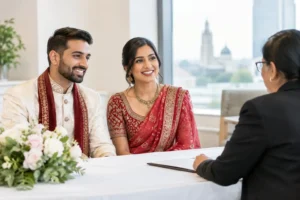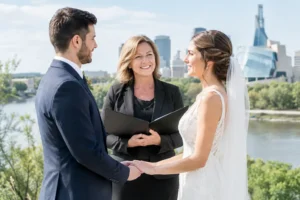
A beautiful setting, meaningful vows, and the people you love can make a wedding unforgettable. But what makes marriage legally valid is a separate question – one that comes down to a few required steps being completed correctly. For couples in Winnipeg and surrounding Manitoba communities, understanding those steps early can make the entire experience feel far more simple, personal, and stress-free.
A legal marriage is not determined by the size of the celebration, the cost of the venue, or whether you write your own vows. A quiet same-day ceremony can be just as legally recognized as a larger wedding with a full guest list, provided the legal requirements are met. The key is having the right documents, the right people present, and a licensed professional who completes the ceremony and paperwork properly.
What Makes Marriage Legally Valid in Manitoba?
In Manitoba, a marriage becomes legally valid when eligible adults marry with free consent, obtain a valid Manitoba marriage license, take part in a ceremony led by an authorized officiant, and sign the required marriage documents with the proper witnesses.
These requirements work together. A marriage license alone does not mean you are married. Likewise, a heartfelt ceremony is not legally binding if there is no valid license or if the person leading it is not authorized to perform marriages in Manitoba.
The process is designed to protect couples and create an official record of the marriage. It may sound formal, but with clear guidance and a little preparation, it does not need to feel overwhelming.
Start With a Valid Manitoba Marriage License
Before the ceremony, you must obtain a Manitoba marriage license. This document gives you permission to marry in the province and must be issued before your ceremony takes place. It is not something an officiant can create at the ceremony, so it is one of the first items to arrange once you have chosen a date.
Both people should be ready to provide the identification and information required by the license issuer. Requirements can vary depending on your circumstances. For example, someone who was previously married may need documents showing that the earlier marriage ended through divorce or death. If either person is under the age of majority, additional consent requirements may apply.
A Manitoba marriage license is generally valid for three months from the date it is issued. That gives many couples flexibility, whether they are planning an elopement in a few weeks or a wedding several months ahead. It also means timing matters: do not obtain it so early that it expires before your ceremony.
Your license should be kept safe and brought to the ceremony. Think of it as the legal foundation for the day. Without it, even the most carefully planned ceremony cannot proceed as a legally recognized Manitoba marriage.
Both Partners Must Be Eligible and Give Free Consent
Legal marriage requires more than paperwork. Both people must be legally eligible to marry and must freely choose to do so. Consent must be real, informed, and voluntary. No one should feel pressured by family, circumstances, immigration concerns, finances, or any other person to enter a marriage.
Each partner must also have the capacity to understand what marriage means and the decision they are making. This is why a licensed officiant will speak directly with the couple and make sure they are present, willing, and comfortable proceeding.
There are also rules around existing marriages and close family relationships. A person cannot legally marry if they are already married to someone else, and certain close relatives cannot marry. These rules may feel obvious to many couples, but they are part of the legal eligibility that supports a valid marriage.
If your situation includes a past divorce, a name difference on identification, international documents, or another detail that feels uncertain, address it before the wedding day. Asking questions early is much easier than trying to solve a document issue moments before the ceremony begins.
The Ceremony Must Be Led by an Authorized Officiant
For a civil marriage to be legally recognized in Manitoba, the ceremony must be performed by a person authorized to solemnize marriages in the province. This may be a licensed marriage commissioner or another legally authorized officiant.
A friend, family member, photographer, or celebrant can play a meaningful role in your day, but they cannot make the marriage legal unless they hold the proper authority in Manitoba. Couples sometimes choose to have a loved one share a reading, offer a blessing, or lead a symbolic portion of the celebration while a licensed commissioner handles the legal ceremony. That can be a wonderful way to honor the people closest to you without overlooking the legal requirements.
Your officiant also helps create calm around the administrative details. They will confirm the license, guide the required declarations, ensure the correct people sign, and submit the completed paperwork after the ceremony. This care is especially valuable for couples planning a mobile ceremony, an intimate home wedding, or a quick legal ceremony on a tight timeline.
Required Words Still Leave Room for a Personal Ceremony
Many couples worry that a legal civil ceremony will feel scripted or impersonal. The good news is that legal requirements do not take away the heart of the occasion.
Manitoba requires certain legal declarations during the ceremony. In simple terms, each person must declare that there is no legal reason they cannot marry and must clearly express their intention to take the other person as their spouse. The officiant must also complete the required portion of the ceremony.
Around those essential legal words, your ceremony can reflect your relationship. You may include personal vows, rings, readings, a moment of gratitude, cultural touches, or a short message about the life you are building together. The level of personalization depends on your preferences, your timeline, and the setting.
For some couples, a five-minute civil ceremony with just two witnesses feels exactly right. For others, the legal words are one meaningful part of a longer celebration with family and friends. Neither choice is more valid than the other. What matters is that the required legal elements are present and that the ceremony feels true to you.
Witnesses Are Part of the Legal Record
Two witnesses must be present at a Manitoba marriage ceremony and sign the marriage documents. They should be adults who can understand what is taking place and witness the ceremony. Their role is practical but important: they confirm that the marriage occurred and that the documents were signed.
Choose witnesses who are dependable and certain to arrive on time. This can be a close friend, sibling, adult child, or another trusted person. If you are planning a small elopement or a same-day ceremony, make witness arrangements early rather than assuming someone will be available at the last minute.
Witnesses do not need to make speeches or have a formal role in the celebration. Their presence can be quiet and simple. Still, for many couples, asking two important people to witness their commitment adds a special layer of meaning to the day.
Signing and Registering the Marriage Correctly
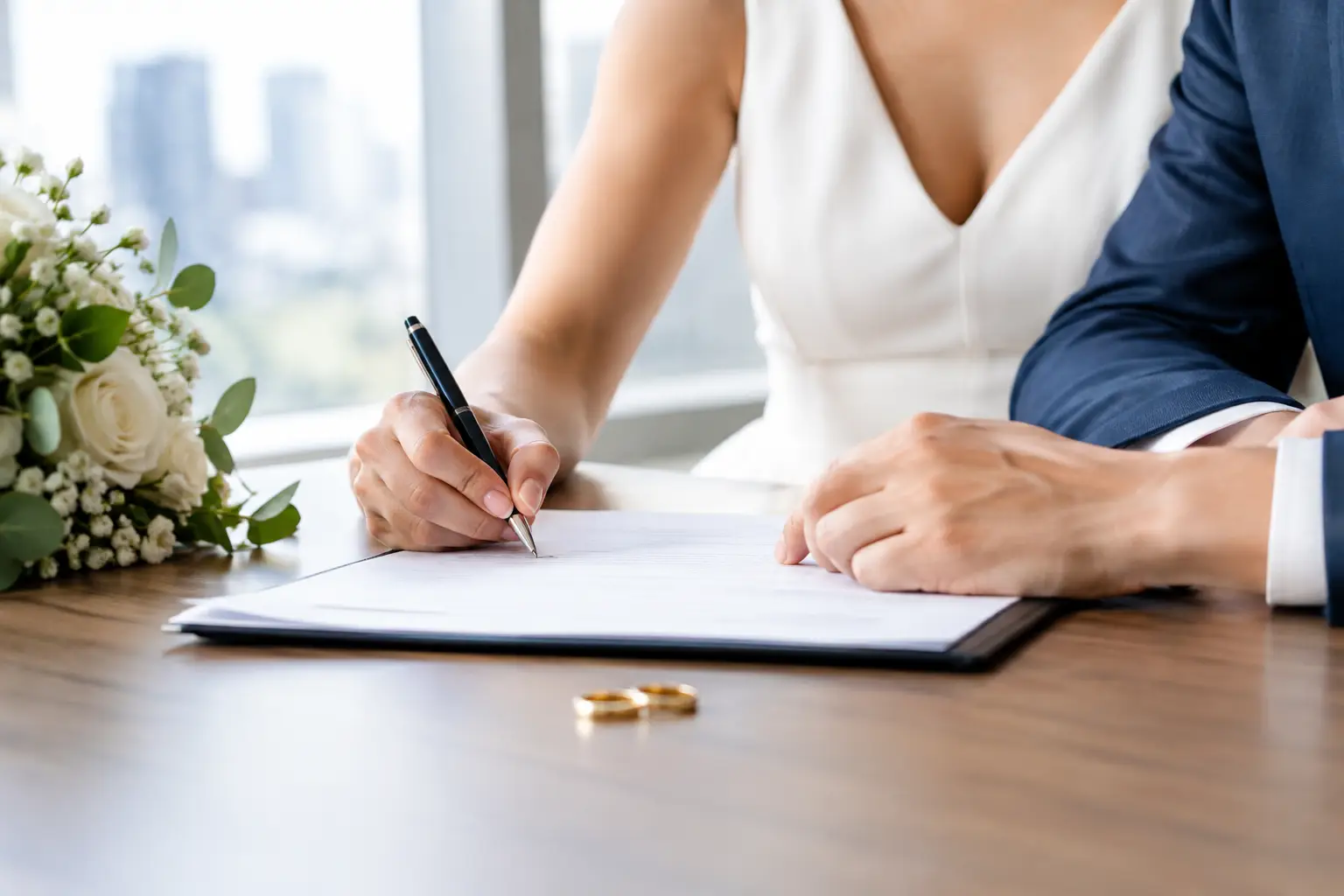
After the required declarations, the marriage license and registration documents must be completed accurately. The couple, witnesses, and officiant sign where required. Names, dates, and other details need to match the legal information provided, which is why reviewing the documents carefully matters.
Once the ceremony is over, the officiant submits the completed registration according to Manitoba procedures. This is the step that creates the official government record of your marriage. The document you sign during the ceremony is not necessarily the same as the official marriage certificate you may need later for a name change, benefits, travel, or other legal purposes.
If you need an official marriage certificate after the registration has been processed, you can apply for one through the appropriate provincial channel. Your officiant can explain the general process and help you understand what to expect, but the certificate itself is issued through the government record system.
A Simple Plan for a Stress-Free Legal Ceremony
Most legal marriage concerns are easy to avoid when the order is clear: choose an authorized officiant, obtain your marriage license within the valid time frame, confirm two adult witnesses, and bring your identification and license to the ceremony. From there, your officiant can guide the legal wording and paperwork.
It is also wise to discuss logistics before the day arrives. Confirm the ceremony location, start time, parking or entry details, guest count, weather backup plans for outdoor ceremonies, and how long you would like the ceremony to be. These small details help the experience feel organized rather than rushed.
Deepika Aggarwal offers commissioner-led civil ceremonies across Winnipeg and surrounding Manitoba communities, with thoughtful guidance for couples who want their legal marriage handled with care. Whether you are planning an intimate elopement, a personalized wedding, or a simple ceremony with your witnesses, the legal side can be clear, calm, and respectful of the commitment you are making.
Your wedding does not have to look a certain way to count. Bring the required documents, choose people you trust, and make space for the words and moments that matter most to both of you.