A wedding can be beautifully simple: the two of you, a valid marriage license, the people you want nearby, and a moment that feels true to your relationship. A marriage commissioner Winnipeg couples choose should make the legal details feel clear and manageable while giving the ceremony the care it deserves.
Whether you are arranging a private signing, an intimate elopement, or a celebration with family and friends, your commissioner has a central role. They are the licensed professional who conducts the legally recognized civil marriage ceremony, confirms the required documents are in place, and completes the marriage registration properly after you say your vows. The right support can replace last-minute uncertainty with a calm, meaningful experience.
What a Marriage Commissioner in Winnipeg Does
A marriage commissioner is authorized to solemnize civil marriages in Manitoba. That means the ceremony is legally valid when the proper requirements are met, including a valid Manitoba marriage license and the required signatures.
The legal role matters, but it is only part of the experience. A thoughtful commissioner also helps you understand what needs to happen before the ceremony, what to bring on the day, and how the signing process will work. For couples who have never planned a wedding before, that guidance can make a significant difference.
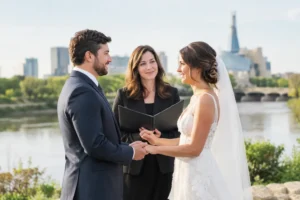
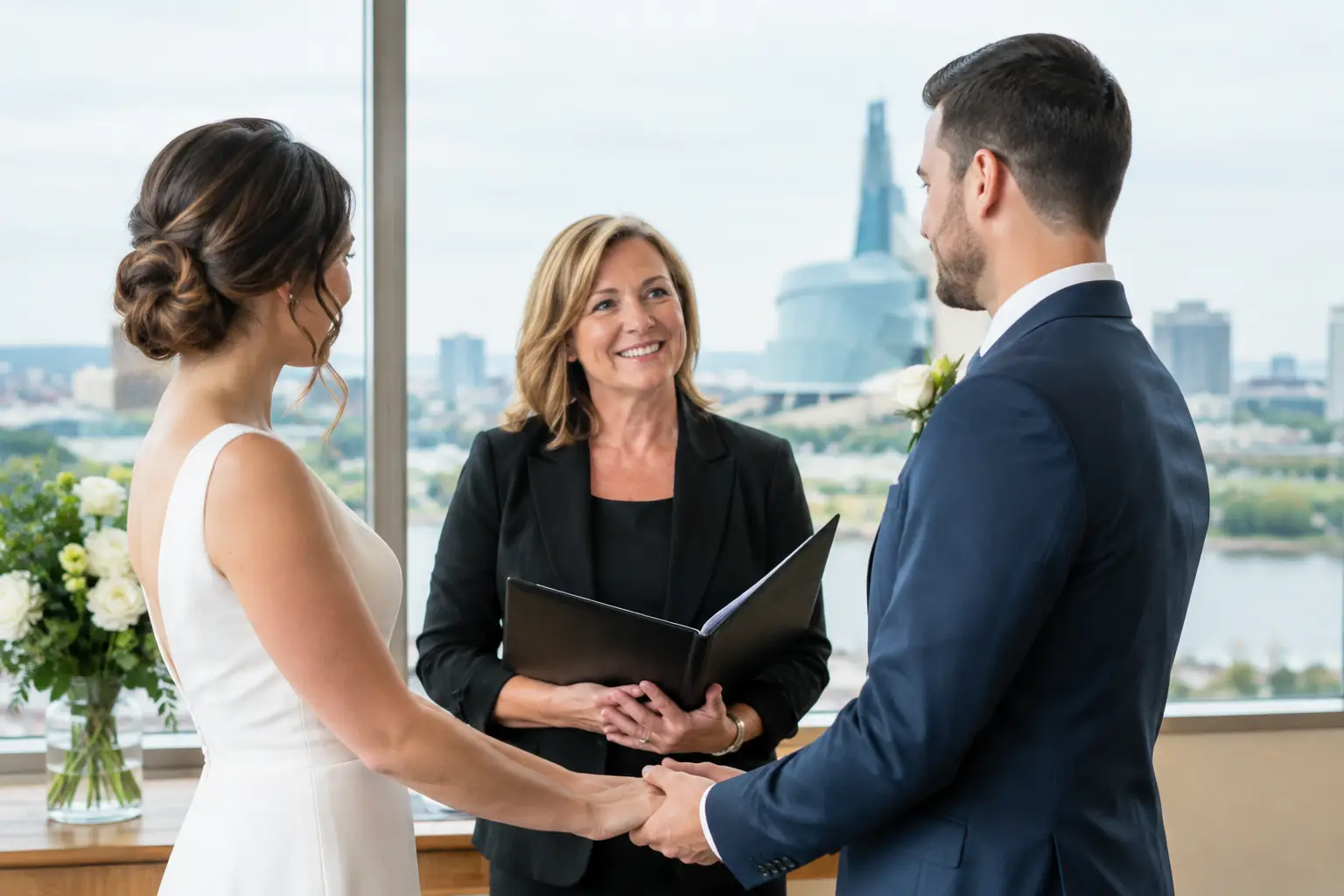
Your commissioner can conduct a civil ceremony that is short and straightforward, or one that includes personal vows, readings, ring exchanges, and words that reflect your story. Civil ceremonies are not religious services, but they can still be warm, heartfelt, and deeply personal.
A commissioner does not issue the marriage license. Couples need to obtain their license before the ceremony through an authorized issuer in Manitoba. Because requirements and processing details can change, it is wise to confirm the current requirements when you apply rather than relying on old information from friends or social media.
Start With the Legal Requirements
The most common source of stress is not the ceremony itself. It is wondering whether the paperwork has been handled correctly. Starting with the essentials early gives you more flexibility with dates, locations, and ceremony plans.
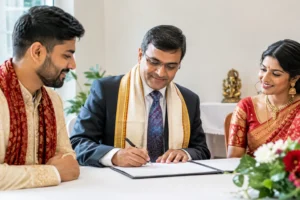
Before your wedding, obtain a valid Manitoba marriage license. Bring it with you to the ceremony, along with any identification or information your commissioner has asked you to prepare. You will also need two witnesses present to sign the marriage documents. Choose people who are reliable, comfortable participating, and able to stay through the signing.
Your commissioner will review the license and guide the legal signing process. After the ceremony, they complete their portion of the registration so the marriage can be recorded. If you will need proof of marriage later for a name change, benefits, immigration, travel, or other administrative reasons, ask about the process for ordering an official marriage certificate after registration.
A little planning is especially helpful when your timeline is tight. Same-day or short-notice ceremonies may be possible depending on commissioner availability, but a ceremony cannot proceed without the required license. Securing the license remains the first step, even when everything else comes together quickly.
Choose the Ceremony That Fits Your Day
There is no single right way to get married. Some couples want a quiet weekday appointment with two witnesses and a few meaningful words. Others want to stand in front of a full room, exchange customized vows, and celebrate afterward with everyone they love. Both are equally valid.
Simple civil ceremonies
A simple civil ceremony is a good fit when your priority is completing the legal marriage process respectfully and without extra formality. It can still feel special. You may exchange rings, say personal vows, or keep the ceremony brief and focused on the commitment you are making.
This option often works well for couples with busy schedules, those planning a larger celebration later, or people who prefer privacy. The trade-off is that a shorter format leaves less room for readings, music, and extended personal elements. For many couples, that simplicity is exactly the point.
Elopements and intimate weddings
An elopement gives you space to focus on each other. It may involve only the two of you and your witnesses, or a very small group of loved ones. An intimate wedding can feel relaxed while still allowing room for a personalized ceremony, photographs, and a meaningful setting.
These ceremonies are ideal for couples who want fewer moving pieces without losing emotional depth. A personalized script can include your names, your preferred tone, a ring exchange, and vows that sound like you rather than something copied from a standard template.
Larger celebrations and mobile ceremonies
If you are planning a full wedding, a marriage commissioner can come to your selected venue in Winnipeg or surrounding Manitoba communities. A home, restaurant, park, event space, or family property can all create a memorable setting, provided the location works for the ceremony and signing process.
Mobile service offers flexibility, but it also requires a little coordination. Consider travel time, parking, weather if you are outdoors, sound for guests, and a quiet table or flat surface for documents. If an outdoor location is part of your plan, have a backup option in case Manitoba weather has other ideas.
Make the Ceremony Personal Without Making It Complicated
Personalization does not need to mean writing a long ceremony from scratch. Often, a few intentional choices are enough to make the moment feel like your own.
You may choose whether to include a ring exchange, personal vows, a reading from a loved one, or a brief acknowledgment of family members who are present or remembered. You can also decide on the overall feeling: formal and traditional, warm and conversational, private and brief, or celebratory and lighthearted.
The key is to share your preferences early. Let your commissioner know what matters to you, how many guests you expect, whether anyone will be speaking, and whether there are cultural or family traditions you would like respectfully recognized. Clear communication allows the ceremony to flow naturally rather than feeling rushed or generic.
At the same time, keep the legal portion protected. Guests may remember the personal vows and happy tears, but the official declarations and signing are what make the marriage legally recognized. An experienced commissioner balances both, giving your ceremony heart while ensuring every required step is completed carefully.
Questions to Ask Before You Book
When comparing a marriage commissioner in Winnipeg, look beyond whether a date is available. You want someone who is responsive, organized, and comfortable with the type of ceremony you have in mind.
Ask whether they are licensed to perform civil marriages in Manitoba, whether they serve your venue or community, and what is included in their service. Confirm the expected timing, ceremony length, travel arrangements if applicable, and what you should bring on the day. If you are planning a short-notice ceremony, be direct about your timeline from the first conversation.
It also helps to ask how personalization works. Some couples want a ready-to-go civil script; others want input on vows and ceremony wording. Neither approach is better. The best choice is the one that makes you feel comfortable, supported, and represented.
A dependable commissioner should provide clear answers without making the process feel overwhelming. You should leave the conversation knowing what happens next, what documents are needed, and how your ceremony will be organized.
Plan for a Calm, Memorable Moment
On your wedding day, try to arrive a little early with your license, rings if you are exchanging them, and both witnesses. Give yourselves a few quiet minutes before the ceremony begins. Even a simple legal ceremony deserves room to breathe.
At Deepika Aggarwal, the goal is to offer couples a personal, organized, and respectful civil marriage experience, whether they are planning months ahead or working within a shorter timeline. Your commitment is the center of the day. The paperwork and logistics should support that moment, not distract from it.
When you are ready to choose a date, think first about the experience you want to remember: the setting, the people beside you, and the words that will feel meaningful years from now. With the legal requirements prepared and a caring commissioner guiding the ceremony, you can be present for the part that matters most – marrying the person you love.