
A beautiful ceremony can happen in a backyard, at a favorite restaurant, in a quiet park, or with just two witnesses in the room. Before any of those moments can become a legal marriage, though, there is one essential step: obtaining a marriage licence. For couples in Winnipeg and across Manitoba, understanding that step early helps keep the day personal, organized, and free from last-minute stress.
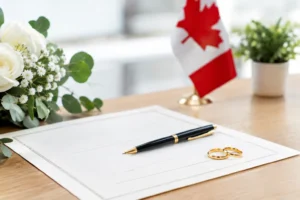
A marriage licence is not just another item on a wedding checklist. It is the legal authorization that allows a licensed marriage commissioner or religious officiant to perform your marriage ceremony in Manitoba. Once it is in place, you can focus more fully on what matters – the commitment you are making and the people you want beside you.
What a Marriage Licence Does in Manitoba
Your Manitoba marriage licence confirms that you are legally eligible to marry in the province. It must be obtained before your ceremony takes place, whether you are planning a large celebration, a simple civil wedding, or a same-day ceremony.
The licence is different from a marriage certificate. The licence gives you permission to marry. After the ceremony and legal registration have been completed, you can later order an official marriage certificate if you need formal proof of your marriage for a name change, benefits, immigration matters, insurance, or other records.
A commissioner can guide you through what needs to happen before your ceremony, but a marriage commissioner does not issue the licence. You will need to purchase it through an authorized Manitoba marriage licence issuer. Planning this step before confirming your ceremony date gives you more flexibility and peace of mind.
When to Get Your Marriage Licence
Timing matters, particularly for couples arranging an elopement, a short-notice wedding, or a date with family traveling in from out of town. In Manitoba, a marriage licence is generally valid for three months from the date it is issued. Your legal ceremony must happen within that period.
That window gives most couples room to plan, but it is still wise not to leave the purchase until the final day. Issuers may have their own hours, appointments, and document-review procedures. If you are hoping for a same-day ceremony, confirm that you can obtain the licence first and that your commissioner is available afterward.
You do not need to be a Manitoba resident to marry here. That can be especially helpful for couples who live elsewhere but want to celebrate in Winnipeg or another Manitoba community. The key is that the ceremony itself must take place in Manitoba and be performed by someone authorized to solemnize marriages in the province.
What to Bring When Applying
Each couple’s paperwork can be a little different, especially when there has been a previous marriage, a name change, or documents issued outside Canada. The marriage licence issuer will confirm what applies to your situation. In general, be ready to provide acceptable identification and accurate legal information for both people getting married.
Bring original identification rather than relying on photos or copies. Your documents should clearly support details such as your legal name, age, and date of birth. If either of you has been married before, you may need documents showing that the earlier marriage legally ended, such as a divorce certificate, a certificate of divorce, or a death certificate.
If a divorce took place outside Canada, allow additional time. Foreign divorce documentation may require review before a Manitoba marriage licence can be issued. This is one area where assumptions can create delays, so it is best to contact an authorized issuer well ahead of your preferred ceremony date.
Couples under 18 may have additional requirements. Manitoba has age and consent rules that must be followed, and an issuer can explain the current requirements for your circumstances. Clear answers at the beginning make the rest of the planning process much easier.
Your Ceremony Needs More Than Paperwork
Once you have the licence, you can bring it to your ceremony. Do not treat it as something to leave in a drawer until after the wedding. Your commissioner needs the original licence before the legal ceremony can be completed.
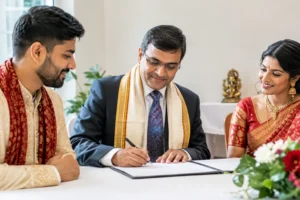
A legally recognized civil marriage ceremony in Manitoba requires the couple, an authorized officiant, and two witnesses who can understand the ceremony and sign the registration documents. Your witnesses do not need to be wedding-party members. They can be trusted friends, relatives, or other adults you have asked to share in the moment.
The legal wording must be included during the ceremony, but that does not mean the experience has to feel impersonal. A ceremony can be brief and private, warm and family-centered, or thoughtfully personalized with vows, readings, meaningful music, or cultural touches. The legal requirements provide the framework; your relationship gives the ceremony its heart.
For an intimate ceremony, many couples appreciate knowing exactly what will happen. You arrive with your licence and identification as requested, your commissioner confirms the details, the ceremony is performed, and the required documents are signed. With the administration handled carefully, there is room to be present with one another.
Marriage Licence Questions Couples Often Miss
A common question is whether the licence must be purchased in the same community where the ceremony will occur. In Manitoba, a licence issued in the province can generally be used anywhere in Manitoba during its valid period. That means you may obtain it in one community and marry in another, as long as the ceremony takes place before it expires.
Another concern is the name you will use after marriage. Getting married does not automatically change your name on every record. Some people choose to use a spouse’s last name socially or professionally, while others keep their current name or use a different legal option. If you plan to update government identification, banking, insurance, or travel documents, an official marriage certificate may be needed after the marriage is registered.
Couples also sometimes assume a keepsake document received on the wedding day is the same as a government-issued certificate. It is meaningful to have a ceremonial record of your day, but it may not be accepted for official purposes. If you need formal proof later, order the appropriate certificate through Manitoba’s vital statistics process once registration is complete.
Keep Your Wedding Plans Simple and Personal
The easiest way to avoid stress is to separate the legal essentials from the creative decisions. First, confirm your ceremony date, obtain the marriage licence, choose two witnesses, and make sure your commissioner has the original licence. Then you can decide how you want the day to feel.
Perhaps that means a fast civil ceremony before a larger celebration later. Perhaps it means exchanging personal vows at home with your children, parents, and closest friends. Perhaps it means a mobile ceremony at a venue that already means something to both of you. There is no single right level of formality for a meaningful wedding.
Working with a commissioner who communicates clearly can make a major difference, particularly when your timeline is short. Deepika Aggarwal offers commissioner-led support for couples who want their legal requirements handled with care while still having a ceremony that feels true to them. Availability, location, guest count, and ceremony style can all shape the best plan.
Before booking your ceremony, take a moment to confirm your licence timeline and document needs directly with an authorized issuer. Then choose a date, place, and ceremony style that let you look at each other, take a breath, and remember why you chose to marry in the first place.