A beautiful venue, meaningful vows, and the people you love most can make a wedding unforgettable. But before the ceremony begins, one practical question deserves a clear answer: who is legally able to marry you? Understanding the difference between a marriage commissioner versus wedding officiant helps Winnipeg and Manitoba couples choose the right person for both the legal process and the feeling they want on the day.
The terms are often used as though they mean the same thing. Sometimes they do. The difference comes down to legal authority, the type of ceremony you want, and the role your chosen professional will play in guiding you through the details.
What Is a Marriage Commissioner?
A marriage commissioner is a person authorized by the Province of Manitoba to perform legal civil marriage ceremonies. Their role is centered on making sure your marriage is completed properly, respectfully, and in accordance with provincial requirements.
For couples who want a non-religious ceremony, a marriage commissioner is often the most direct choice. The ceremony can be simple and private, held at home, or take place at a restaurant, park, event venue, or another location that feels right for you. It can be an intimate elopement with just the required witnesses or a larger celebration surrounded by family and friends.
A commissioner does more than arrive to read legal wording. A caring, experienced commissioner helps you understand what needs to happen before the ceremony, including obtaining your marriage license and preparing the necessary information. During the ceremony, they lead the legal declarations, ensure the documents are signed correctly, and explain the next steps after you are married.
That guidance matters, especially when your timeline is short or you are planning from outside the city. A missed document, unclear witness plan, or last-minute misunderstanding should not take attention away from your commitment to one another.
Civil does not have to mean impersonal
A civil ceremony is legally focused, but it can still be warm, thoughtful, and personal. You may prefer a brief ceremony with simple vows and a quiet signing moment. Or you may want a more customized ceremony that includes your story, personal promises, readings from loved ones, or meaningful cultural elements that fit within a civil format.
The legal portion must be handled correctly, but there is room to make the experience feel like yours. The best ceremonies balance both: they honor the seriousness of the marriage commitment without becoming stiff, generic, or overly complicated.
What Does Wedding Officiant Mean?
Wedding officiant is a broader term. It generally refers to the person who leads a wedding ceremony. Depending on the situation, that person may be a marriage commissioner, a religious representative, or another individual legally authorized to perform marriages.
This is where couples can become confused. Not every person who can lead a meaningful ceremony is legally authorized to marry you in Manitoba. A friend or family member may be a wonderful speaker, for example, but they cannot simply sign the legal marriage documents unless they hold the appropriate legal authority.
Some couples choose to have a legally authorized commissioner complete the marriage ceremony and invite a friend or family member to share a reading, tell part of their story, or take part in another special moment. This can be a lovely way to include someone important while keeping the legal process clear and properly managed.
Religious ceremonies may be performed by a faith leader who is authorized to solemnize marriages. For couples seeking a ceremony rooted in a specific faith tradition, that may be the right fit. For couples who prefer a flexible, inclusive, non-religious ceremony, a marriage commissioner often provides the most straightforward option.
Marriage Commissioner Versus Wedding Officiant: The Key Difference
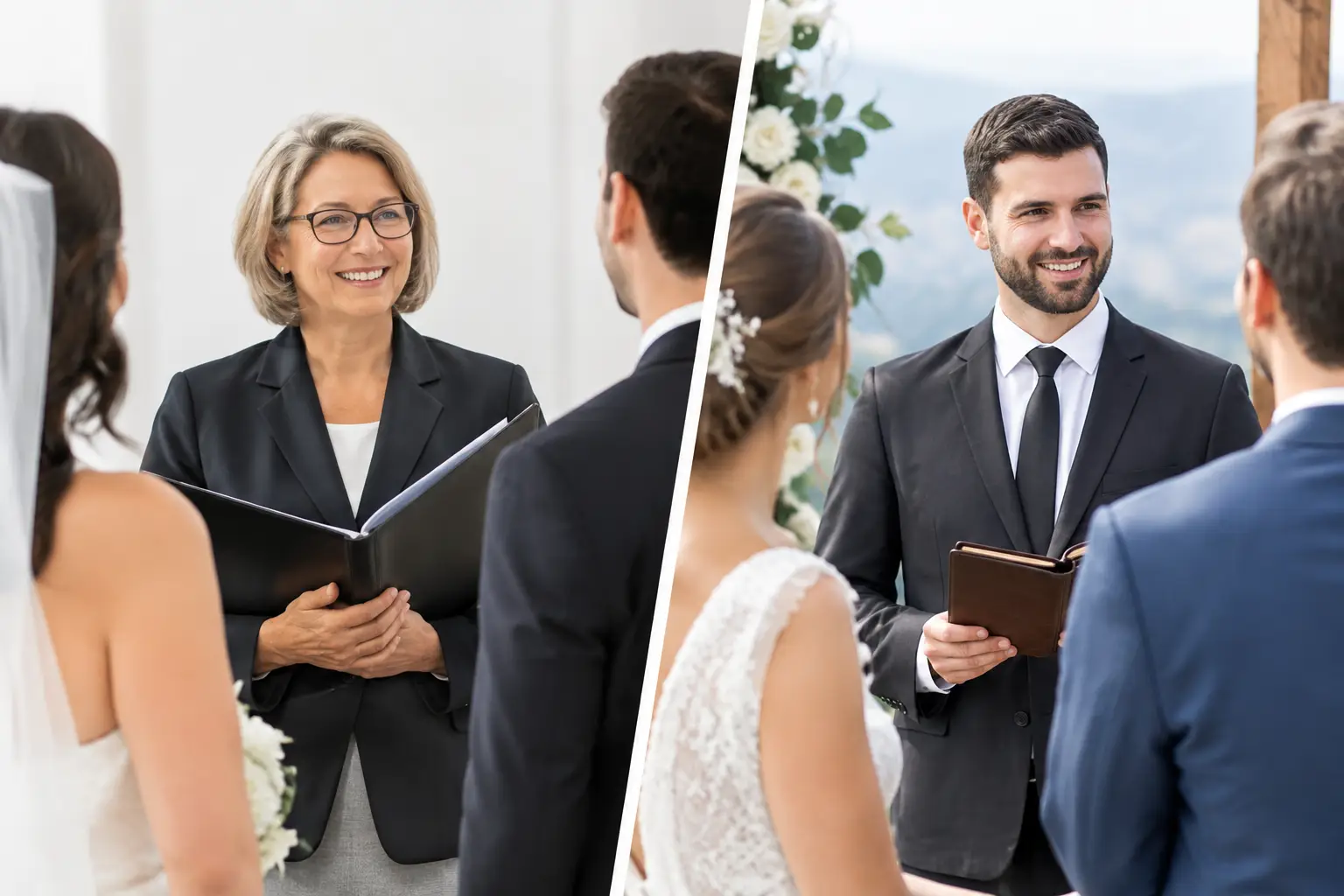
The simplest way to think about a marriage commissioner versus wedding officiant is this: a marriage commissioner is a specific legal role in Manitoba, while a wedding officiant is a general description for someone who conducts a wedding ceremony.
A commissioner can be your wedding officiant because they lead the ceremony and legally marry you. But the term wedding officiant alone does not confirm that a person has legal authority in Manitoba. Before booking, ask directly whether they are authorized to perform a legally recognized marriage and whether they will guide you through the required paperwork.
This distinction is especially helpful when you are planning an elopement, a same-day ceremony, or a celebration at a nontraditional venue. A clear answer upfront gives you confidence that your ceremony will be both heartfelt and legally valid.
How to Choose the Right Person for Your Ceremony
Start with the kind of experience you want. If you are planning a civil wedding and want professional support with the legal details, a licensed marriage commissioner is likely the right choice. If a religious ceremony is essential to you, speak with a representative from your faith community about their authority and process.
Then consider how much flexibility you need. Some couples are planning well in advance and want time to personalize every part of their ceremony. Others have a small window to get married before a move, travel, family event, or personal milestone. A commissioner who offers responsive communication, mobile service, and flexible scheduling can make a significant difference.
It is also worth asking how the ceremony will be shaped. You should know whether you can include personal vows, how long the ceremony typically lasts, what your witnesses need to do, and whether the officiant will travel to your preferred location. These questions are not minor details. They help you avoid surprises and create a calm, organized experience.
Finally, choose someone whose manner feels comfortable to you. Your officiant will stand with you during a deeply personal moment. You deserve a professional who is punctual and prepared, but also warm, respectful, and attentive to the people and traditions that matter to you.
What You Need Before a Legal Manitoba Wedding
Choosing the right officiant is only one part of the process. You will also need a valid Manitoba marriage license before a legal ceremony can take place. Your marriage commissioner can help explain the timing and information you need to prepare, but the license itself must be obtained through the appropriate process before the ceremony.
You will also need witnesses at your wedding. Your commissioner will guide the ceremony and complete the legal paperwork, while you, your partner, and your witnesses sign the required documents. Afterward, the documents are handled according to the provincial process so your marriage can be officially registered.
Requirements and administrative procedures can change, so it is wise to confirm details early, particularly if you are planning quickly. This is not about adding stress. It is about giving yourselves enough clarity to enjoy the day without wondering whether something has been overlooked.
A note about same-day and short-notice weddings
A short-notice wedding can still feel personal and meaningful. The essential factor is that the legal requirements, including the marriage license, are in place before the ceremony. Availability also matters, especially on weekends and popular dates.
If you are hoping to marry soon, reach out as early as possible with your preferred date, location, guest count, and the type of ceremony you have in mind. A direct conversation makes it easier to confirm what is possible and organize the details efficiently.
Your Ceremony Can Be Both Legal and Meaningful
There is no need to choose between a ceremony that feels emotionally true to you and one that is properly completed. Whether you are planning a quiet signing ceremony in Winnipeg, an intimate elopement, or a joyful gathering with everyone you love, the right legal professional can bring calm structure to the moment.
Deepika Aggarwal offers commissioner-led civil ceremonies designed around each couple’s timeline, location, and comfort level, with clear guidance from the first conversation through the signing of the paperwork. The goal is simple: you should be able to focus on each other, knowing the legal details are being handled with care.
Your wedding day does not need to follow anyone else’s script. Once you have the right person to legally marry you, you can make room for the vows, people, and small moments that will stay with you long after the paperwork is complete.