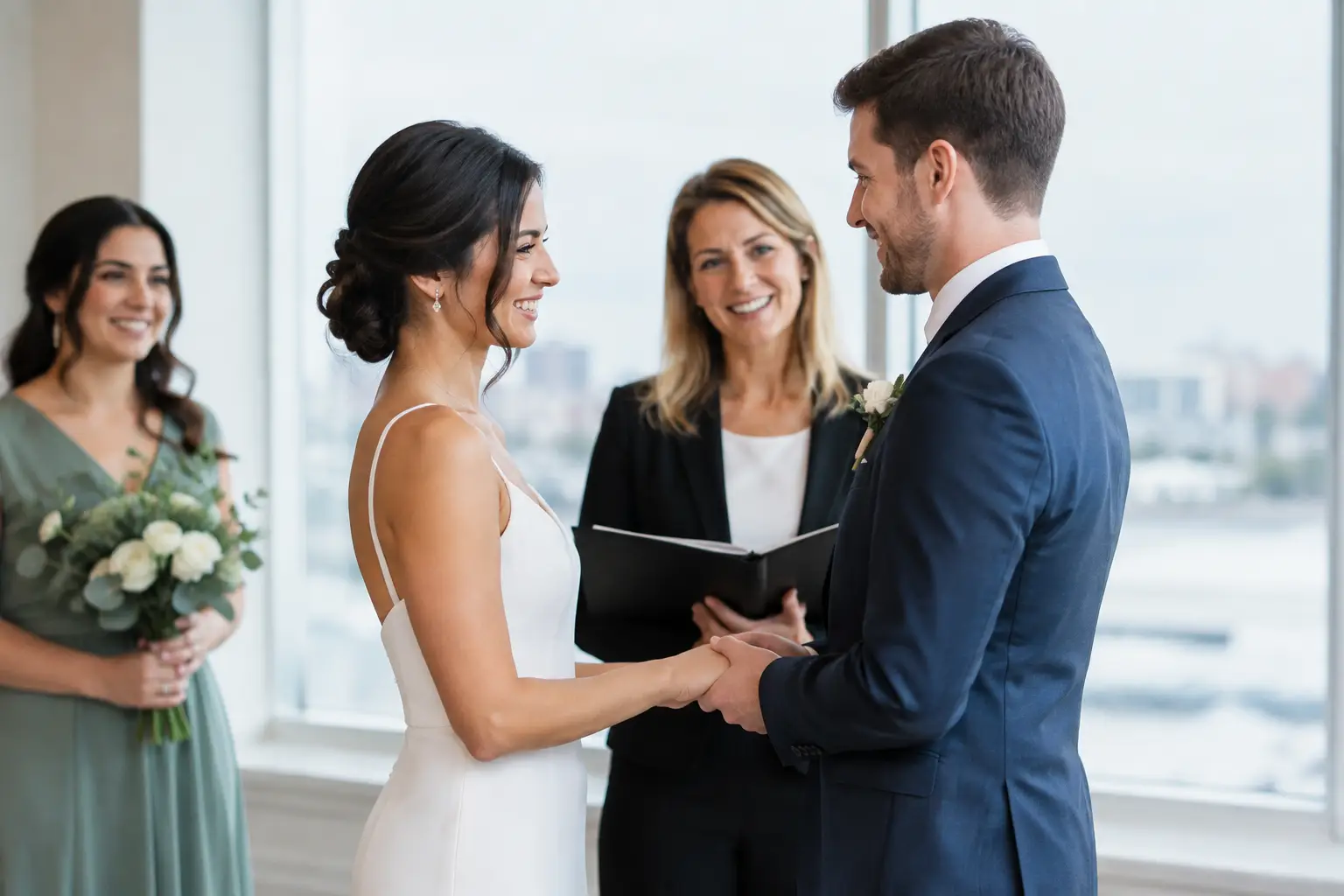
The ceremony can be as private as you wish, but the legal signing cannot be skipped. If you are asking, do you need witnesses to marry in Manitoba, the answer is yes. A legally recognized marriage ceremony in Manitoba requires two witnesses to be present with you, your marriage commissioner or officiant, and the required marriage documents.
That does not mean your wedding needs to become a large event. Your witnesses can be two trusted people who support your relationship, whether you are planning a quick civil ceremony in Winnipeg, a quiet elopement, or a personalized celebration surrounded by family and friends. With a little planning, this requirement is simple to handle and can still feel personal to your day.
Do You Need Witnesses to Marry in Manitoba? Yes, Two
Manitoba requires two witnesses at a legal marriage ceremony. They must be physically present when the marriage takes place and sign the marriage registration after the ceremony. Their signatures confirm that they witnessed you and your partner freely take part in the marriage ceremony.
Your marriage commissioner also completes and signs the required registration, but the commissioner does not take the place of either witness. The couple, the two witnesses, and the commissioner each have a distinct role in making sure the marriage is properly documented.
This applies regardless of the size or style of your wedding. A courthouse-style civil ceremony, a backyard wedding, a ceremony at a restaurant, and an intimate home elopement all need two witnesses if the marriage is to be legally recognized in Manitoba.
Who Can Be a Witness at Your Manitoba Wedding?
In most cases, the right witnesses are people who know you well and are happy to share in the moment. They may be friends, siblings, adult children, parents, cousins, or other meaningful people in your life. A witness does not need to be a Canadian citizen, Manitoba resident, or member of your wedding party.
Witnesses should be at least 18 years old and able to understand what they are witnessing and signing. They need to be present for the actual ceremony, not just arrive afterward for photos or paperwork. They should also be comfortable signing their own names clearly on the marriage registration.
Choosing witnesses is often a lovely way to include people when you are keeping your ceremony small. For an elopement, couples sometimes invite just two close friends. For a larger wedding, the maid of honor and best man are common choices, but there is no rule that says your witnesses must hold those roles.
If a person you hoped to choose is under 18, has difficulty understanding the legal purpose of the signing, or may be unable to attend in person, choose another witness before the ceremony. A quick conversation with your commissioner ahead of time can prevent last-minute uncertainty.
Can You Have a Private Elopement With Only Two Witnesses?
Absolutely. Many couples want the legal simplicity of a civil ceremony without a guest list, formal reception, or lengthy planning timeline. In Manitoba, the smallest legal ceremony generally includes five people: the two people getting married, two witnesses, and the licensed marriage commissioner or authorized officiant.
This can be beautifully intimate. You might gather in your living room, at a meaningful outdoor location, in a private venue, or somewhere that reflects your relationship. The legal requirements remain the same, while the words, setting, timing, and overall feeling can be tailored to you.
A private ceremony still deserves thoughtful preparation. Choose witnesses who can arrive on time, confirm that the location works for everyone, and make sure you have your marriage license ready before the ceremony begins. If you are planning an outdoor wedding, have a backup plan for Manitoba weather so that a sudden change does not add stress to your signing process.
What Your Witnesses Need to Do
Your witnesses have a straightforward but meaningful responsibility. They should attend the ceremony from the beginning or, at minimum, be present for the part where you make the required declarations and are pronounced married. Afterward, they will sign the marriage registration where directed by the commissioner.
They do not need to give a speech, read vows, bring identification, or know every detail of Manitoba marriage law. They simply need to be present, attentive, and ready to sign.
It is helpful to tell them in advance that they have an official role. Let them know the ceremony start time, the address, parking details if relevant, and whether the setting is indoors or outdoors. If they are traveling from out of town, build in extra time. A delayed witness can delay the legal ceremony.
For a smooth signing, ask your witnesses to bring a pen only if your commissioner has requested it. Most commissioners arrive prepared with the materials needed to complete the paperwork accurately.
Do Witnesses Need to See Your Marriage License?
Your witnesses do not need to apply for your marriage license or be involved in obtaining it. The license is the responsibility of the couple. Before the ceremony, you will need a valid Manitoba marriage license issued within the required validity period.
Bring the original license to your ceremony and give it to your marriage commissioner when requested. Without a valid license, a commissioner cannot legally perform the marriage, even if your witnesses are present and everyone is ready to celebrate.
This is one of the most common details couples worry about, especially when arranging a shorter timeline. A license and two witnesses are separate requirements. You need both, along with a licensed commissioner or other authorized officiant, for a legal Manitoba marriage ceremony.
Your commissioner can help you understand what to prepare for the ceremony, but cannot issue the marriage license on your behalf. It is wise to arrange it early rather than leave it until the wedding day.
What Happens After Everyone Signs?
Once the ceremony is complete, your commissioner handles the marriage registration according to Manitoba requirements. You may receive a keepsake document or record of your ceremony, depending on the arrangements, but this is not the same as an official government-issued marriage certificate.
If you later need proof of marriage for a name change, benefits, immigration, financial records, or other official purposes, you can apply for an official marriage certificate after the marriage has been registered. Processing times can vary, so avoid scheduling time-sensitive paperwork around an assumed immediate certificate date.
Keep your ceremony keepsakes in a safe place, but remember that the commissioner’s accurate completion and submission of the registration is what supports the legal record of your marriage.
A Few Details That Make the Day Easier
The witness requirement is simple, yet small details can make a difference. Confirm your two witnesses before you finalize the ceremony time and location. Have their full legal names ready if your commissioner requests them in advance. If one witness may need to cancel, identify a reliable backup who is at least 18 and can attend in person.
It also helps to arrive a few minutes early, especially for a mobile ceremony at a park, hotel, restaurant, or public space. That gives your commissioner time to check the marriage license, answer final questions, and explain when signatures will happen. There is no need for the paperwork to interrupt the emotional part of your ceremony when everyone knows what to expect.
A personalized civil ceremony can include your own vows, readings, rings, cultural touches, or a simple exchange of promises. The key is that the legal declarations and signing requirements are properly included. A professional commissioner can balance both: the legal care your marriage deserves and a ceremony that feels like it belongs to you.
Whether you are planning months ahead or hoping for a simple ceremony soon, choosing your two witnesses is one small step toward a meaningful, legally recognized marriage. Deepika Aggarwal offers compassionate, organized commissioner-led ceremonies across Winnipeg and surrounding Manitoba communities, with guidance that helps couples arrive feeling prepared, present, and ready to celebrate.