
The words that stay with you after a wedding are rarely the most formal ones. They are the promises you made in your own voice, the story that made your guests smile, and the quiet moment when you looked at each other and knew this was real. To personalize a nonreligious wedding ceremony, start with the parts of your relationship that already carry meaning. A civil ceremony can be legally recognized, organized, and deeply personal at the same time.
A nonreligious ceremony does not have to feel plain or impersonal. It simply gives you more room to choose language, music, readings, and traditions that reflect your values. Whether you are planning a private Winnipeg elopement, a backyard gathering, or a larger celebration with family and friends, the goal is the same: create a moment that feels honest to you both.
Start With the Feeling You Want to Create
Before choosing readings or writing vows, talk about how you want the ceremony to feel. Some couples want it lighthearted and relaxed. Others want a thoughtful, emotional ceremony with room for reflection. You may want a short civil ceremony followed by a lively reception, or you may prefer a longer ceremony that gives your loved ones a fuller picture of your journey together.
There is no single right level of formality. The most successful ceremonies are not built around what a wedding is supposed to look like. They are shaped around what makes the couple comfortable.
Consider the atmosphere you want your guests to experience. Do you picture laughter, happy tears, a sense of calm, or all three? A clear answer helps guide every other choice, from the opening words to the music that plays as you walk in.
Build a Ceremony Around Your Story
Your ceremony does not need to include every milestone of your relationship. A few specific details usually feel more meaningful than a complete timeline. Think about the moments that explain who you are together: how you met, a challenge you handled as a team, a shared love of travel or family dinners, or the small habit that makes everyday life feel like home.
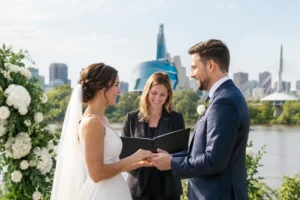
Share these details with your wedding officiant in advance. A licensed marriage commissioner can use them to create remarks that are warm and personal while keeping the legal portion of the ceremony clear and properly handled.
Choose an Opening That Sounds Like You
The opening sets the tone. If you are private people, a simple welcome may feel best. If your guests have supported your relationship for years, you may want to acknowledge the community that brought everyone together.
You can invite guests to be fully present, thank parents and friends, or recognize loved ones who cannot attend. For some couples, a brief moment of silence is a meaningful way to honor someone important. This can be included without making the ceremony religious.
Tell Your Story With Care
A personalized story should feel affectionate, not embarrassing. The best details are usually ones that reveal your character as a couple rather than inside jokes that leave guests confused.
You might describe how one of you brings calm while the other brings spontaneity, or how your relationship grew through ordinary acts of care. Keep it genuine. A wedding ceremony is not a performance. It is a public promise between two people who have chosen each other.
Write Vows You Can Actually Say
Personal vows can be one of the most moving parts of a nonreligious ceremony. They can also feel intimidating, especially if you are worried about speaking in front of a crowd. The answer is not to force yourselves into long speeches. Short, sincere vows are often the strongest.
Start with a few simple questions: What do you appreciate about your partner? What have you learned from them? What do you want to promise in your life together? Your vows can be tender, practical, funny, or a combination of all three.
If writing separate vows feels too vulnerable, you can make shared promises together. You may also choose traditional-style civil wording and add one personal sentence each. It depends on your comfort level, not on anyone else’s expectations.
Add Readings, Music, or Rituals With Purpose
A nonreligious ceremony can include meaningful elements without becoming crowded. Choose additions because they matter to you, not because you feel a wedding checklist requires them.
A reading may come from a poem, a novel, a film, a letter, or a piece of writing that reflects your values. Ask someone who is comfortable speaking clearly and slowly to read it. One well-chosen reading is usually enough.
Music can also create a personal connection. Consider a song that marks an important time in your relationship, an instrumental piece that creates a calm atmosphere, or a favorite song for your recessional. Be practical about the venue, weather, sound system, and timing. A beautiful song loses some impact if guests cannot hear it.
Rituals can be meaningful when they reflect your story or family background. You might include a unity candle, handfasting, a sand ceremony, a wine box, or letters to be opened on a future anniversary. If you are blending families, a ritual that includes children can be especially moving. Keep in mind that outdoor ceremonies can make candles, loose sand, and paper items more difficult to manage.
Keep the Legal Marriage Requirements Clear
Personal touches are important, but the legal marriage portion deserves the same care. In Manitoba, couples need to meet the current marriage-license and ceremony requirements for their marriage to be legally recognized. Your licensed marriage commissioner can explain what is required, what documents to bring, how witnesses fit into the ceremony, and what happens with the completed paperwork afterward.
It is helpful to separate the legal essentials from the optional elements. The legal declarations, signing process, commissioner, and witnesses need to be handled correctly. Your story, readings, music, exchange of personal gifts, and symbolic rituals can be shaped around those required moments.
This balance is what makes a personalized civil ceremony feel easy rather than stressful. You can focus on being present because the administrative details have a clear place in the plan.
Personalize a Nonreligious Wedding Ceremony for Your Guests Too
Your guests do not need a lengthy explanation of every choice, but they should feel welcomed into the occasion. A brief note in the opening can tell them whether you would like an unplugged ceremony, whether they are invited to participate in a group response, or whether they should remain seated for the signing.
Think about accessibility and comfort as well. If you have older guests, choose seating that allows them to see and hear. For an outdoor Manitoba ceremony, have a weather backup plan, consider wind and shade, and keep the ceremony length realistic. For a small elopement, you may prefer a more intimate structure with fewer formal announcements.
A mobile commissioner-led ceremony also gives you flexibility with location. Your ceremony can take place at home, in a park, at a restaurant, at a venue, or in another setting that matters to you, provided the location and timing support a smooth legal ceremony.
Give Yourselves Time to Practice
You do not need to rehearse every word, but a short walkthrough can make a major difference. Practice where you will stand, when you will exchange rings, who will hold the bouquet, and where the signing will take place. If a reader or family member is participating, confirm their role and arrival time.
Send your officiant the final names, pronunciation notes, selected readings, and vows well before the wedding day. This helps the ceremony move at a comfortable pace and prevents last-minute uncertainty. Deepika Aggarwal works directly with couples to organize these details so the ceremony remains personal, punctual, and legally correct.
The most meaningful ceremony is not the one with the most traditions. It is the one where you can look at each other, speak with confidence, and recognize your real life in the promises you are making. Choose only what feels true, leave room to breathe, and let the moment belong to the two of you.