A wedding witness may have a small speaking role, but they have an essential place in making your marriage official. In Manitoba, your witnesses do more than stand beside you for photos. They are present for the legal ceremony and sign the marriage registration to confirm that your marriage took place. This Guide to legal wedding witnesses helps you make that choice with clarity, so one simple detail does not become a last-minute source of stress.
For many couples, choosing witnesses is easy: a sibling, parent, longtime friend, or the two people who have supported the relationship from the beginning. For an elopement, same-day ceremony, or private civil wedding, however, the question can feel more practical. Who can be a witness? Do they need identification? Can the commissioner provide them? A little planning keeps the legal steps organized while leaving room for the moment to feel completely your own.
What legal wedding witnesses do
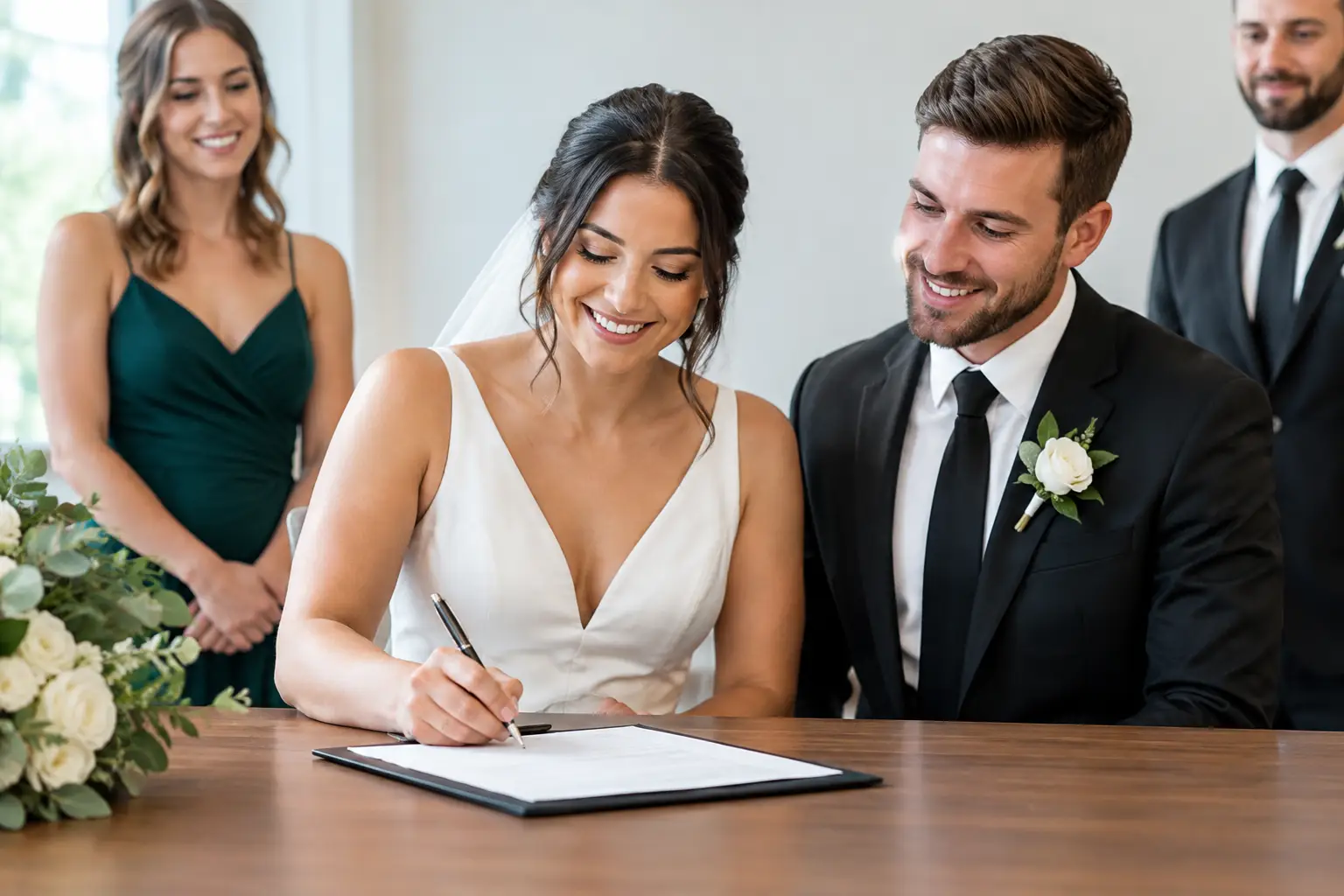
At a Manitoba marriage ceremony, two witnesses are required to be present. After the ceremony, they sign the legal marriage registration along with the couple and the marriage commissioner. Their signature confirms that they witnessed the marriage ceremony.
A witness does not need to make a speech, give a reading, participate in vows, or be part of the wedding party. They can be included in the celebration as much or as little as you wish. Some couples invite witnesses to walk down the aisle or sign in front of guests. Others keep the signing quiet and simple after a short civil ceremony.
What matters legally is that they are physically present for the ceremony and available to sign when asked. A person joining by video call, listening from another room, or arriving only for photos cannot take the place of an in-person witness.
Who can be a wedding witness in Manitoba?
The best witness is someone dependable, available, and comfortable taking part in a legal document signing. In most cases, couples choose adults who know them well. A close friend, adult child, sibling, parent, colleague, or neighbor may all be meaningful choices.
Your witnesses do not need to be related to you, Canadian citizens, members of a particular faith, or part of your wedding party. They also do not need to know every detail of your relationship. Their role is to observe the ceremony and sign the registration accurately.
Because marriage requirements can depend on the circumstances of your ceremony and current provincial procedures, it is wise to confirm witness arrangements with your marriage commissioner before the day. This is especially helpful if one witness is young, does not speak English fluently, has accessibility needs, or will be arriving close to the ceremony time. Clear communication ahead of time protects the ease of the day.
Choose reliability over obligation
It can be tempting to choose witnesses based only on who might feel honored. But a witness needs to arrive on time, stay through the signing, and be comfortable providing their signature clearly. If someone is likely to be delayed, overwhelmed by a large gathering, or leaving early to care for children, consider another role for them.
For a larger wedding, you may have many loved ones you want to recognize. Your two legal witnesses can be the people who sign the documents, while others can give readings, bring the rings, offer a toast, or take part in a cultural tradition. The legal requirement does not limit the ways you can include the people you love.
Guide to legal wedding witnesses: planning the signing
The signing portion of a marriage ceremony is usually brief, but it deserves the same care as your vows. A calm, organized signing helps ensure every required signature is completed correctly and that the commissioner can submit the registration without avoidable delays.
Tell your witnesses in advance that they have a legal role. Let them know the ceremony time, location, parking details, and the expectation that they stay until all documents are signed. If you are holding a mobile ceremony at a park, restaurant, home, hospital, or other chosen venue, give them a contact number and a clear meeting point.
On the day, your commissioner will guide the signing process and indicate exactly where each person should sign. You do not need to memorize paperwork rules or manage the documents yourself. Your focus can remain on each other, while your commissioner keeps the legal process orderly.
It is also a good idea to choose two primary witnesses and, when practical, identify one or two backup options. A backup is particularly helpful for outdoor ceremonies during uncertain weather, ceremonies planned around travel, or same-day weddings where timelines are tight. The backup does not sign unless needed, but knowing who could step in brings peace of mind.
Do witnesses need to bring identification?
Your witnesses should come prepared to sign their names clearly and provide any information requested by the commissioner for the registration. Whether identification is needed can vary based on the documentation process, so ask this question when you book your ceremony rather than making assumptions.
A practical approach is to remind witnesses a few days before the wedding to bring government-issued photo ID if they have it. This simple reminder can prevent unnecessary uncertainty, particularly when guests are traveling or when a ceremony is taking place outside the couple’s home community.
Witnesses for elopements and small civil ceremonies
Private weddings often create the most questions about witnesses. A couple may want an intimate ceremony with only the two of them and their commissioner, or they may be planning a quiet elopement away from family. The legal witness requirement still applies, so two witnesses must be arranged.
This does not mean your private ceremony has to feel less personal. You might invite two close friends for the ceremony and celebrate with family later. Some couples ask the owners of a small venue, trusted neighbors, or local friends to be present. If you are planning a same-day or short-notice ceremony, speak openly with your commissioner about your guest situation as early as possible.
When you book with Deepika Aggarwal, you can discuss the kind of ceremony you want, your guest count, and any concerns about witnesses before the appointment is confirmed. Thoughtful planning is especially valuable when your timeline is short, your ceremony is mobile, or you are keeping the occasion intentionally small.
Make the role feel meaningful
Legal does not have to mean impersonal. A witness signature represents a real moment: two people saw you make a commitment and helped mark the beginning of your married life. You can acknowledge that role in a way that suits your style.
Some couples give their witnesses a handwritten note before the ceremony. Others invite them to stand nearby during the signing or take a few photographs immediately afterward. At a larger wedding, the commissioner may announce the signing as part of the ceremony flow. At an elopement, the moment may be quiet, private, and just as moving.
There is no requirement to give gifts or create a formal witness proposal. The most meaningful gesture is often a sincere explanation of why you chose them. Let them know that their presence matters to you, not only because they are needed for the paperwork, but because they have been part of your story.
Avoid common witness-day problems
Most witness issues are easy to prevent. The common concerns are late arrivals, a witness leaving before the documents are signed, uncertainty about where to meet, and selecting someone who is not able to participate as required. A short message the day before can solve nearly all of these problems.
Confirm the ceremony start time and ask witnesses to arrive a little early. Share the exact address, especially for outdoor venues or private residences. Remind them that the signing happens after the ceremony, and ask them to wait until the commissioner confirms that everything is complete.
If your plans change, tell your commissioner promptly. A change of venue, a missing witness, or an unexpected delay can often be handled more smoothly when it is communicated before guests arrive. Your marriage commissioner is there to guide the legal steps, but early notice gives everyone more options.
Your witnesses do not need to make the day complicated. Choose people who will show up with care, let your commissioner guide the paperwork, and then take a moment to look around the room. The signatures may take only minutes, but the people beside you will remember being there when your marriage became official.