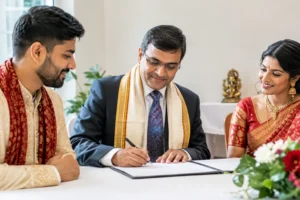
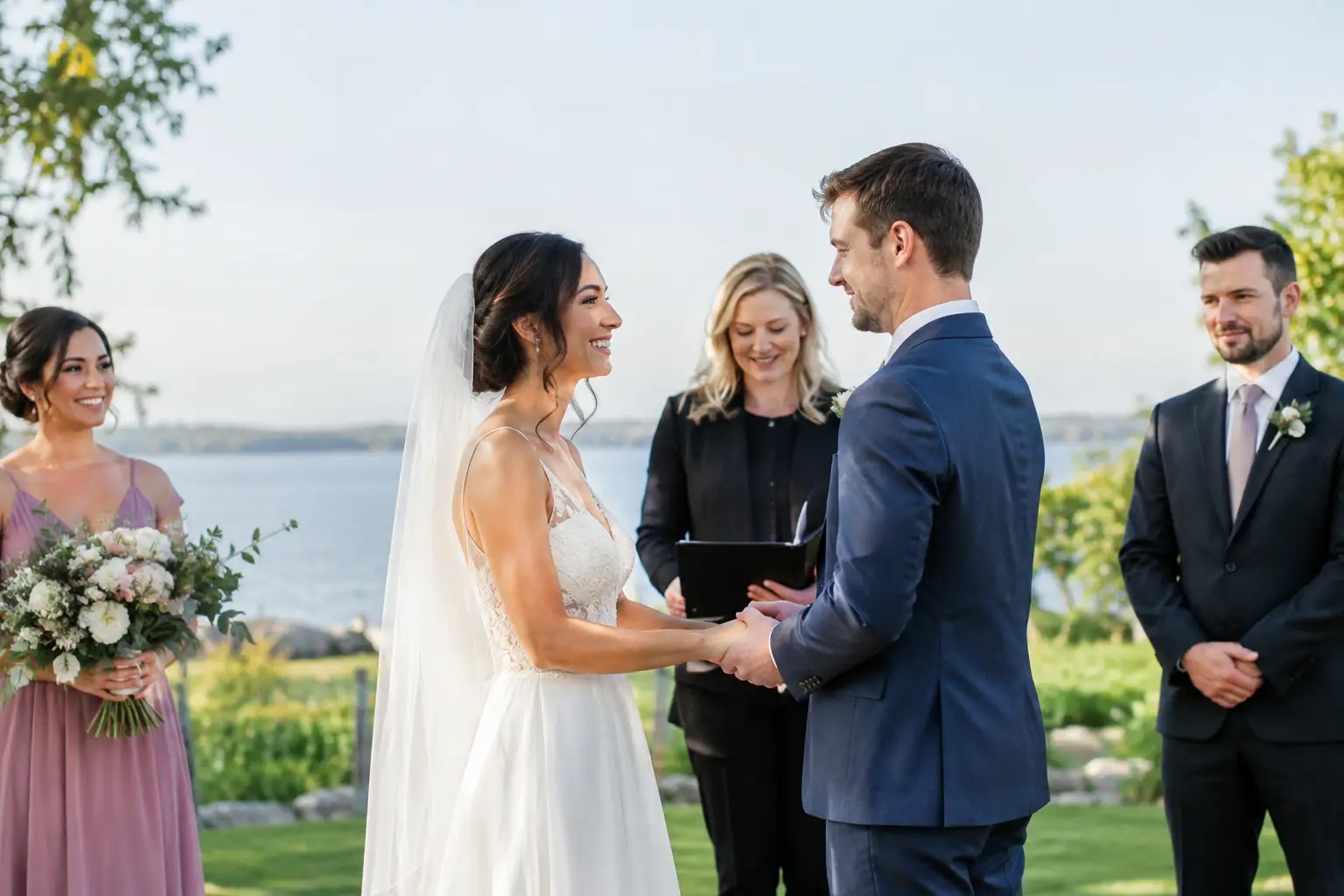
A wedding can be beautifully simple – two people, a marriage commissioner, the right paperwork, and two people standing nearby to witness the moment. But when couples ask, “Who can witness Manitoba weddings?” they are usually looking for reassurance that a friend, sibling, parent, or other loved one can legally take on that role. In most cases, the answer is yes, as long as the witnesses meet the basic requirements and are present for the ceremony.
Choosing witnesses is a small but meaningful part of planning a legally recognized Manitoba marriage. These are the people who see you make your commitment, then sign the marriage documents to confirm that the ceremony took place. A little planning before the wedding day helps the legal process stay simple, personal, and stress-free.
Who Can Witness Manitoba Weddings?
A Manitoba marriage ceremony requires at least two credible witnesses. They must be physically present when the ceremony takes place and available to sign the marriage registration documents afterward. They are not simply guests who arrive for photos or the reception. Their role is part of the legal record of your marriage.
For most couples, witnesses are people they already trust and want close to them: close friends, siblings, parents, adult children, cousins, or members of their wedding party. Your witnesses do not need to be Canadian citizens, Manitoba residents, or related to either of you. They also do not need a special title or formal legal background.
The key is that each person can understand what is happening, observe the ceremony, and sign their own name on the required documents. Because a witness is confirming a legal event, choosing responsible adults is the clearest and most practical approach.
Your marriage commissioner will guide everyone through the signing process. The couple, the two witnesses, and the commissioner each have an important role, so it is helpful to identify your witnesses well before the ceremony begins.
The Two-Witness Requirement Is Not Optional
Manitoba requires two witnesses for a legal marriage ceremony. Whether you are planning a private elopement, a same-day ceremony where timing permits, a backyard wedding, or a larger celebration in Winnipeg, the requirement remains the same.
A small ceremony does not mean a witness-free ceremony. Even when a couple wants a quiet and intimate exchange of vows, two witnesses must attend in person. If privacy is especially important, those witnesses can be the only guests present besides the commissioner.
This can be a comforting option for couples who want to keep the day focused. You might invite one trusted person from each side, ask two close friends, or include family members who have supported your relationship. The ceremony can still feel deeply personal without a large audience.
Can the marriage commissioner be one of the witnesses?
No. The marriage commissioner performs the ceremony and completes the commissioner’s part of the legal registration. The witnesses are separate people who attend the ceremony and sign as witnesses. Plan for two additional adults beyond the couple and the commissioner.
Can one person witness for both partners?
No. You need two separate witnesses. They are both witnessing the same marriage ceremony, not representing one partner or the other, but each person must be present and sign the documents independently.
Who Makes a Good Wedding Witness?
The best witness is someone dependable who will arrive on time, stay through the signing, and feel comfortable taking part in a meaningful legal moment. They do not have to give a speech, walk down an aisle, or participate in any particular tradition. Their essential job is to witness the ceremony and sign the paperwork clearly.
A good witness should be mature enough to understand the significance of the role. While couples sometimes ask about asking a younger teen or child, adult witnesses are generally the safest choice. This avoids uncertainty about whether the person can understand the ceremony, provide a reliable signature, and meet the commissioner’s practical requirements.
Consider choosing people who are calm under pressure. Wedding days can involve traffic, weather, delayed hair appointments, busy venues, and emotional nerves. A reliable witness helps keep the ceremony moving smoothly rather than creating one more detail for you to manage.
If you are planning a destination-style celebration in Manitoba or inviting guests from outside the province, ask your selected witnesses to confirm their attendance early. A last-minute cancellation matters more when only two people have been designated to sign.
Witnesses Must Attend in Person
A witness needs to be present for the actual ceremony. Watching a recording later, joining by video call, or signing a document after the fact does not replace being there when the marriage takes place.
This matters for elopements and small ceremonies where one guest may need to step outside for a phone call, care for a child, or coordinate vendors. Let your witnesses know that they need to remain available from the start of the ceremony until the marriage documents have been signed.
If you are holding your wedding at a restaurant, park, private home, hotel, or another mobile ceremony location, set aside a quiet, stable place for signing. A table, firm writing surface, and a few uninterrupted minutes make a difference. Signing legal paperwork while standing in the wind or balancing pages on someone’s car can lead to avoidable errors.
What Witnesses Need to Do on the Wedding Day
Your witnesses do not need to prepare a statement or memorize legal wording. The commissioner leads the ceremony and tells everyone when it is time to sign. Still, it helps to tell your witnesses in advance what to expect.
They should arrive a little early, especially if your ceremony is at a venue with parking, security, or an unfamiliar entrance. They should stay nearby during the ceremony, listen as you exchange the required declarations, and wait for the commissioner’s direction before signing.
Before the day, remind your witnesses to bring any identification your commissioner has asked them to have available. Requirements and best practices can vary depending on the ceremony arrangements, so it is wise to confirm the details directly with your commissioner rather than making assumptions.
Most importantly, witnesses should sign carefully and use their usual legal signature. Names, signatures, and handwritten details need to be clear. Rushing through this step can create unnecessary follow-up, which is exactly what couples want to avoid after a joyful ceremony.
What If You Do Not Have Two Witnesses?
Not every couple is surrounded by a large guest list. You may be new to Winnipeg, planning an elopement, marrying on short notice, or keeping the day private for personal reasons. That does not mean you need to abandon the idea of a simple legal ceremony. It means you need a plan for two witnesses before the ceremony begins.
Start with people you trust who can join you for a short period of time. They do not have to attend a meal, photos, or a larger celebration afterward. Some couples ask two friends to attend only the ceremony, while others choose relatives who are happy to share in that one special moment.
If your original witnesses cannot attend, tell your commissioner as soon as possible. A professional commissioner can explain the practical options available for your specific timeline and ceremony location. Deepika Aggarwal provides direct guidance so couples can feel organized before the paperwork is placed in front of them.
Do not wait until you are already at the venue to solve a witness issue. A legal ceremony cannot proceed as planned without the required witnesses present, and last-minute uncertainty can turn an otherwise calm day into a stressful one.
A Simple Witness Checklist for Manitoba Couples
Before your ceremony, confirm these details with your two chosen witnesses:
- They are both available to attend the full ceremony in person.
- They understand they will sign legal marriage documents afterward.
- They know the ceremony time, location, parking details, and when to arrive.
- They will bring any identification requested by your commissioner.
- They will use their regular signature and take a moment to sign clearly.
This short conversation protects the flow of your ceremony and lets everyone focus on what matters most: your commitment to one another.
Your witnesses may only sign one line on the day, but their presence carries real meaning. Choose people who will be glad to stand beside you, make a clear plan with them, and then give yourself permission to enjoy the moment you have been waiting for.